Listeners:
Top listeners:
-
play_arrow
Vibrant Radio
-
 play_arrow
Summer Festival Podcast Robot Heart

Portrait of a Legend: Manu Dibango
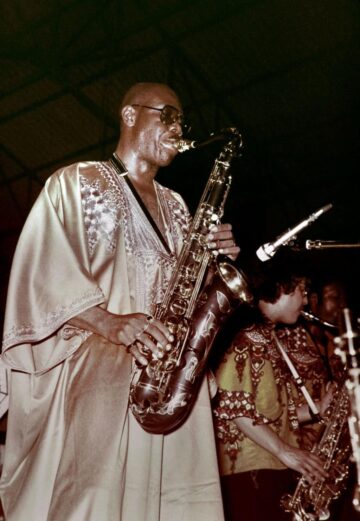
Before Afrobeat became a global marketing term, before “world music” found shelf space in record stores, and before Western pop fully embraced African rhythm structures,
there was Manu Dibango — the towering Cameroonian saxophonist who fused jazz, funk, soul, disco, and makossa into something unmistakably futuristic.
Born in Douala, Cameroon in 1933, Dibango became one of the first African musicians to truly break into international pop consciousness while remaining deeply rooted in African musical traditions. His work helped bridge continents, carrying the pulse of Central and West Africa into American funk clubs, European jazz halls, and eventually the DNA of modern pop music.
The Sound of “Soul Makossa”
Everything begins with Soul Makossa.
Released in 1972 almost accidentally as a B-side connected to the African Cup of Nations tournament, the track exploded after New York DJs started spinning imported copies. Suddenly, American audiences were hearing hypnotic African groove structures layered with jazz saxophone, deep basslines, and raw funk energy.
The chant:
“Ma-ma-se, ma-ma-sa, ma-ma-ko-sa”
became one of the most recognizable vocal hooks in music history, later echoed by Michael Jackson in Wanna Be Startin’ Somethin’ and referenced by countless hip-hop and R&B artists afterward.
Many critics and fans consider Soul Makossa one of the earliest proto-disco records ever made — years before disco fully dominated American radio.
More Than a One-Hit Wonder
Reducing Manu Dibango to Soul Makossa misses the real story.
His catalogue stretched across six decades and constantly evolved. He collaborated with legends including Fela Kuti, Herbie Hancock, King Sunny Adé, and Angélique Kidjo while blending African rhythms with reggae, jazz fusion, funk, soul, gospel, and electronic textures.
Albums like Waka Juju, Electric Africa, and Afrijazzy showed how fearless he was musically. He wasn’t interested in preserving African music in a museum. He wanted it alive, electric, urban, and constantly moving.
That philosophy helped redefine how African musicians could exist globally — not as “folk” artists, but as innovators shaping contemporary sound.
Why Soul Fans Should Care
For soul music lovers, Manu Dibango matters because he understood groove at a spiritual level.
His saxophone phrasing carried jazz sophistication, but his rhythm sections hit with the hypnotic insistence of James Brown-era funk. The basslines rolled like disco, the percussion swung like Afro-Cuban music, and the arrangements often felt years ahead of their time.
You can hear his fingerprints all over:
Afro-funk, disco, acid jazz, hip-hop sampling culture, neo-soul rhythm structures, modern Afrobeats
jazz and funk communities still regularly rediscover Dibango’s music, often expressing disbelief that he isn’t mentioned alongside giants like Miles Davis or Jimi Hendrix in conversations about musical innovation.
Essential Listening
“Soul Makossa” (1972)
The breakthrough anthem. Raw, hypnotic, endlessly sampled.

“New Bell”
Urban Afro-funk with heavy groove architecture and cinematic atmosphere.
“Big Blow”
A slick fusion of jazz-funk and disco energy built for dancefloors.
“Africadelic”
A later-career retrospective showcasing the breadth of his sonic universe.
“Douala Serenade”
A more reflective side of Dibango — melodic, spiritual, deeply atmospheric.

Legacy
When Manu Dibango passed away in 2020 from complications related to COVID-19, tributes poured in from across the global music community. Many recognized him not only as a great African musician, but as one of the architects of modern global groove music itself.
His legacy lives in every artist who dares to fuse cultures, every DJ digging for Afro-funk breaks, and every soul musician chasing rhythm without borders.
Top popular

Breaking: Top Pop Star’s Surprise Album Release Sends Fans into Frenzy
Chart-Toppers Unite: Pop Music’s Biggest Collaborations of the Year
Behind the Scenes: Pop Music’s Hottest Producers and Songwriters
The Rise of K-Pop: How Korean Music Continues to Dominate the Global Scene

Welcome to “Queen of the Stage” – Your Ultimate Blog for Spice
Post comments (0)