Listeners:
Top listeners:
-
play_arrow
Vibrant Radio
-
 play_arrow
Summer Festival Podcast Robot Heart

Portrait of a Legend: Remembering D’Angelo
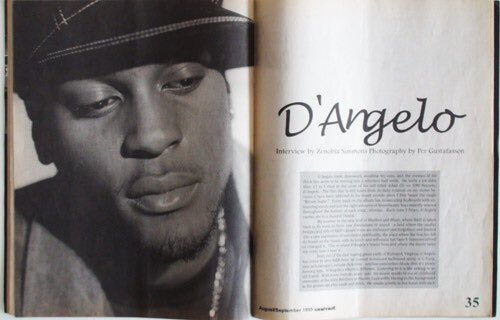
(A Tribute to the Soul Renaissance Man)
Some artists sing. Some perform. And then there are those rare souls who channel something greater than themselves — who open a door between the sacred and the human, letting the spirit pour through every note. D’Angelo was one of those rare ones. His music didn’t just move through speakers; it moved through time, space, and memory. It was less performance and more possession — the sound of someone wrestling with angels and devils, finding divinity in the groove.
When news of his passing broke, it felt like a candle being blown out in a room full of smoke — a moment of silence so heavy it pressed on the chest. We didn’t just lose a musician. We lost a frequency, a vibration, a reminder that soul is something you live, not something you sell.
The Rise — A New Sound for a New Era
When Brown Sugar dropped in 1995, R&B was shifting — caught between the shiny edges of new jack swing and the dominance of hip-hop. Into that landscape came a young man from Richmond, Virginia, with a Fender Rhodes, a head full of church harmonies, and a sound that felt both ancient and brand new.
D’Angelo didn’t ride the wave — he changed its direction. Brown Sugar was smoky, slow, and tender, dripping with groove and vulnerability. Songs like “Brown Sugar,” “Lady,” “Me and Those Dreamin’ Eyes of Mine,” and his cover of Smokey Robinson’s “Cruisin’” (my personal favourite) didn’t just play — they soothed, seduced, healed.
That album helped define what we came to call neo-soul — a movement that rejected the polish of pop for the texture of truth. Alongside Erykah Badu, Maxwell, and Lauryn Hill, D’Angelo became a torchbearer for a generation craving something real.
He was never loud about it. He didn’t have to be. The music spoke in whispers that echoed for decades.
The Silence — The Weight of Genius
Then came Voodoo in 2000 — an album that felt like it arrived through a séance rather than a studio. It was darker, deeper, sexier, stranger. With The Soulquarians (Questlove, Pino Palladino, J Dilla, and others), D’Angelo crafted a living, breathing organism of sound.
The opening hum of “Playa Playa” set the tone — lush, off-kilter, thick with funk. “Send It On” and “One Mo’Gin” were confessions wrapped in rhythm. And then there was “Untitled (How Does It Feel)” — that slow, smouldering sermon on intimacy that stopped the world in its tracks.
But as Voodoo burned hotter, fame grew heavier. The body that became a cultural obsession in the “Untitled” video became a burden. The weight of genius, expectation, and self-discovery pressed hard. Then — silence.
Years passed. Rumours grew. The myth of D’Angelo, the recluse, the fallen angel. But maybe that silence wasn’t absence — maybe it was reflection. Maybe it was the stillness required to protect the purity of the art. He wasn’t running away from music; he was running toward himself.
The Return — Black Messiah and Revolution
When Black Messiah arrived in 2014, it wasn’t just a comeback — it was an eruption. Released without warning, the album hit like thunder in the middle of a storm. The world had changed. Ferguson was burning. Voices were rising. And D’Angelo re-emerged like a prophet out of exile.
From the defiant groove of “The Charade” to the haunting plea of “Till It’s Done (Tutu)” and the gospel fire of “Prayer,” the album throbbed with political urgency and spiritual unrest. “Really Love” offered tender reprieve — a reminder that even in chaos, love remains sacred.
Black Messiah wasn’t about polish or perfection. It was presence. It was the sound of resistance set to rhythm. It spoke the same truth as Marvin Gaye’s What’s Going On, Prince’s Sign o’ the Times, and Curtis Mayfield’s Superfly — that music is both a mirror and a weapon.
D’Angelo wasn’t trying to reclaim fame. He was reclaiming faith. In music. In black artistry. In himself.
The Legacy — The Eternal Groove
D’Angelo’s influence runs deep — in the syncopated swagger of Anderson .Paak, the introspection of Frank Ocean, the minimalist warmth of Daniel Caesar, and even the lush sonic worlds of Solange and H.E.R. His sound taught a generation that imperfection is beauty, that timing is elastic, and that groove is divine.
Listen to his catalogue and you hear more than songs — you hear the lineage of black music stretching from the pulpit to the juke joint, from Marvin and Sly to Dilla and beyond. He took it all — gospel, funk, jazz, hip-hop, blues — and melted it into a sound uniquely his own.
He didn’t chase trends or charts. He chased the spirit. And in doing so, he became timeless.
The Farewell — The Music Remains
It’s hard to write about D’Angelo in the past tense. His songs still breathe. His grooves still pulse under the skin. You can still hear him in the space between heartbeats — that soft hum of bass, that falsetto floating like smoke in a dark room.
He was never an artist for the spotlight. He was a man searching for light. And in that search, he gave us some of the most luminous music of our lifetime.
And now, his greatest rhythm continues in the quiet resilience of his son, Michael D’Angelo Archer II — who must now walk this world without both parents, after already losing his mother, the incomparable Angie Stone only a short time ago. Theirs was a lineage of soul, artistry, and courage — a family bound by melody and meaning.
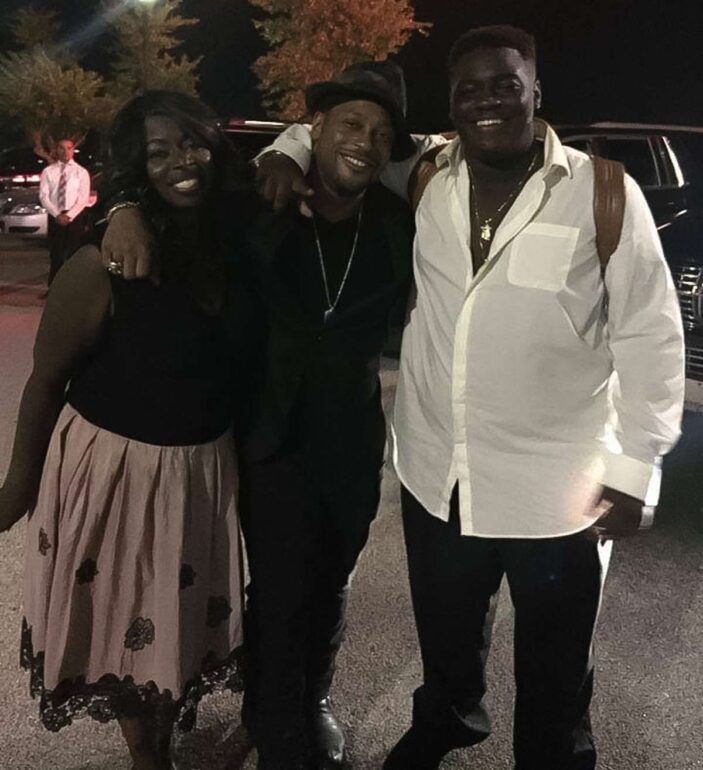
“In a world that moves too fast, D’Angelo slowed us down long enough to feel something real.”
Now, the silence returns. But this time, it feels sacred — a reminder that legends never truly leave. They echo in the spaces they once filled.
Rest easy, D. The groove goes on.
Author’s Note
Written with love and gratitude for D’Angelo (1974–2025), whose music reminded us that the truest revolution is rhythm — and the deepest prayer is song
Top popular

Breaking: Top Pop Star’s Surprise Album Release Sends Fans into Frenzy
Chart-Toppers Unite: Pop Music’s Biggest Collaborations of the Year
Behind the Scenes: Pop Music’s Hottest Producers and Songwriters
The Rise of K-Pop: How Korean Music Continues to Dominate the Global Scene

Welcome to “Queen of the Stage” – Your Ultimate Blog for Spice

Post comments (0)