Listeners:
Top listeners:
-
play_arrow
Vibrant Radio
-
 play_arrow
Summer Festival Podcast Robot Heart

🎤 The Soul of Change: Motown & The Civil Rights Movement
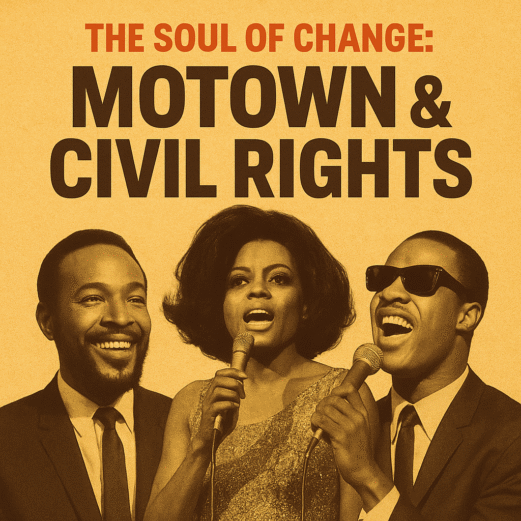
“Standing Firm in Power and Pride” — Celebrating the Soundtrack of Freedom
Motown wasn’t just a record label — it was a revolution wrapped in rhythm.
In the heart of Detroit, during one of the most turbulent decades in American history, Berry Gordy’s Motown Records became a symbol of unity, pride, and Black excellence. While the Civil Rights Movement marched through the streets, Motown’s music marched through the airwaves, breaking barriers and bringing a message of love, resilience, and social change to living rooms around the world.
✊🏾 The Soundtrack of a Movement
In the 1960s, America was at a crossroads. As activists demanded justice and equality, Motown’s artists were creating a parallel movement through music. Songs like Marvin Gaye’s “What’s Going On”, The Temptations’ “Ball of Confusion”, and The Supremes’ “Love Child” echoed the pain, hope, and strength of a people refusing to be silenced.
Motown gave the world a new kind of soul — one that dared to sing about heartbreak and hope in the same breath. The label’s polished sound and crossover success helped Black artists reach mainstream audiences without losing their cultural heartbeat.
Motown showed that Black creativity could be unapologetically proud — and universally loved.
🎙️ Voices That Changed the Conversation
Motown’s roster read like a hall of fame: Stevie Wonder, Diana Ross & The Supremes, The Four Tops, The Temptations, Smokey Robinson, and Marvin Gaye.
These artists didn’t just perform — they became messengers of transformation.
-
Marvin Gaye’s “What’s Going On” (1971) became an anthem for peace, social justice, and environmental awareness — questions that still resonate today.
-
Stevie Wonder used his music to demand equality and joy, later leading the campaign to make Dr. Martin Luther King Jr.’s birthday a national holiday.
-
Aretha Franklin, though not signed to Motown, embodied its spirit with her commanding anthem “Respect”, a song that became the voice of both the Civil Rights and Women’s Liberation movements.
These songs didn’t just move your feet — they moved your conscience.
🕊️ The Motown Message: Unity Through Sound
Behind the harmonies and the glamour, Motown had a mission: to bring people together.
Berry Gordy called it “The Sound of Young America” — and it truly was. Motown crossed racial divides, bringing Black music into the mainstream without losing its soul. It proved that rhythm and resilience could change hearts long before laws caught up.
Motown artists toured the segregated South, facing discrimination but refusing to bow. Every note, every lyric, every performance was a quiet act of resistance — a declaration that Black is beautiful, powerful, and unstoppable.
🌍 Legacy That Still Inspires
The legacy of Motown lives on in every beat of modern R&B, soul, and pop.
Its message — that unity, pride, and perseverance can change the world — still rings true today.
Motown taught us that music is more than entertainment. It’s a movement. It’s a voice. It’s power set to a backbeat.
🎧 Vibrant Radio – Week 2: The Sound of Resistance and Revolution
Let’s honour the artists who sang for freedom — and remember that every time we play a Motown classic, we’re keeping their message alive:
“We’ve come too far not to keep singing.”
Top popular

Breaking: Top Pop Star’s Surprise Album Release Sends Fans into Frenzy
Chart-Toppers Unite: Pop Music’s Biggest Collaborations of the Year
Behind the Scenes: Pop Music’s Hottest Producers and Songwriters

The Rise of K-Pop: How Korean Music Continues to Dominate the Global Scene

Welcome to “Queen of the Stage” – Your Ultimate Blog for Spice

Post comments (0)